

How to Handle Rainy-Weather Driving Tests in BC?

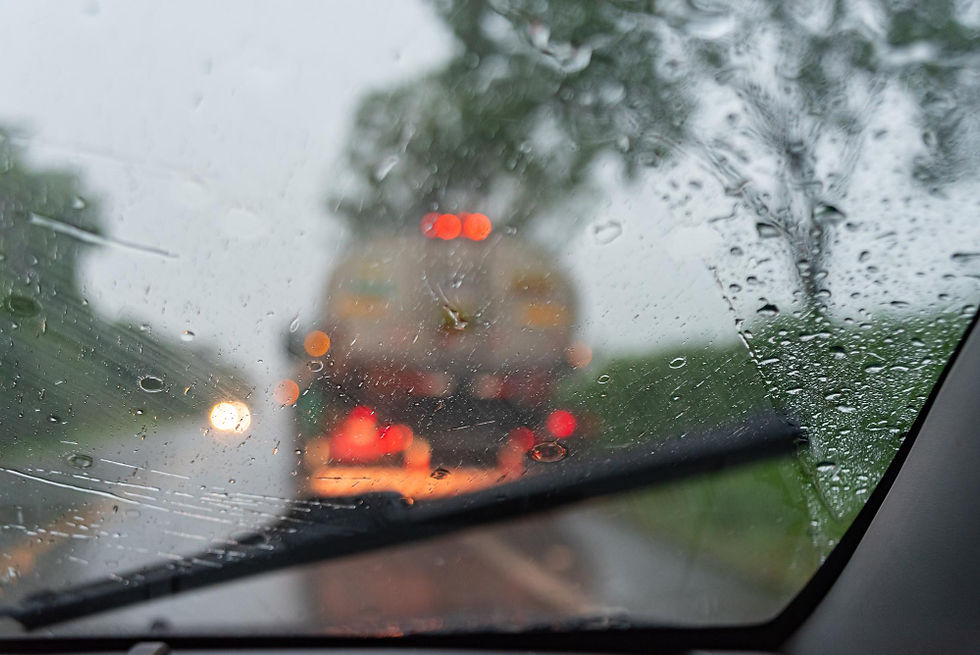
Rain is one of the most common conditions new drivers face on ICBC road test day, especially in a province where wet pavement is the norm rather than the exception. If your test date falls on a rainy afternoon, the good news is that you almost certainly won't need to reschedule. The better news is that with the right preparation, driving in the rain can actually work in your favour, since it shows the examiner you can handle real-world conditions calmly and safely.
Will ICBC Cancel Your Road Test Because of Rain?
Light to moderate rain rarely affects your appointment. ICBC road tests are designed to reflect everyday driving conditions, and since rain is a regular part of life in British Columbia, examiners are trained to evaluate your driving in wet weather just as they would on a dry day. Cancellations related to weather are reserved for severe or hazardous conditions, such as heavy snow, ice, or flooding, rather than ordinary rainfall.
According to ICBC's own booking guidance, appointments should be made directly through their official system, and customers who need to reschedule can do so without incurring late cancellation fees if the change is made through the proper channel. If your local road test office does decide to cancel due to unsafe conditions, you will be contacted directly to arrange a new appointment rather than losing your booking altogether. In other words, rain by itself is almost never a reason for concern — the real work is making sure you're ready to drive safely in it. ICBC
Why Rainy-Weather Testing Isn't Necessarily Harder
Many new drivers assume that a rainy test day automatically means a lower chance of passing. In practice, examiners don't apply a different scoring standard for wet weather. What changes is the margin for error. Stopping distances increase, visibility drops, and road noise can make it harder to hear turn signals or engine cues. The skills being tested are the same ones you've already practiced — the difference is that rain simply removes any room for sloppy habits like following too closely or checking mirrors too quickly.
Framed this way, a rainy test is less about extra difficulty and more about extra precision. Drivers who slow down mentally, give themselves more space, and stay deliberate with every movement tend to perform just as well in the rain as they do in dry conditions.
Adjusting Your Driving Technique for Wet Roads
Speed control matters more in the rain than almost anything else. Wet pavement roughly doubles your stopping distance compared to dry roads, so leaving extra following distance behind the vehicle ahead gives you the buffer you need if traffic slows suddenly. Braking should be smooth and gradual rather than sharp, since sudden braking on a wet surface increases the risk of skidding.
Visibility is the second major factor. Headlights should be on even during daytime rain, both to help you see and to make your vehicle visible to others — a habit examiners specifically look for. Windshield wipers should be set to a speed that keeps the glass clear without becoming a distraction, and side windows should stay clear of fog, since a foggy window can hide a shoulder check and cost you points on the test.
Steering inputs should also be smaller and more controlled. Rain reduces tire grip, and sudden or exaggerated steering movements are more likely to cause a slide, particularly at intersections or on curves. Keeping both hands on the wheel and making gradual adjustments helps maintain traction throughout the test route.
Preparing Your Vehicle Before Test Day
A rainy test day starts before you even leave the driveway. Wiper blades should be checked for streaking or skipping, since a damaged blade can obstruct your view at the worst possible moment. Tire tread depth is worth a quick check too, as worn tires lose grip far faster in wet conditions than new ones. Defrost and defog settings should be tested in advance so you're not fumbling with climate controls once the test begins.
It's also worth doing a short practice drive in similar conditions a day or two before your appointment. Getting comfortable with how your specific vehicle handles in the rain — how quickly it stops, how the wipers perform at different speeds, how the windows fog — removes one more variable from an already nerve-wracking day.
Managing Nerves on a Rainy Test Day
Rain adds a layer of mental pressure that has nothing to do with driving skill. The sound of rain on the roof, reduced visibility, and the knowledge that conditions are "less than ideal" can make even a well-prepared driver feel rattled before the test even starts. A simple way to manage this is to reframe the rain as a normal variable rather than an obstacle. Almost every experienced driver in BC has learned to drive competently in the rain, and the test is really just confirming that you can do the same.
Arriving a few minutes early to sit in the car, let the windows clear, and settle your breathing can make a noticeable difference. Examiners are also human, and a driver who appears calm and methodical — even in poor weather — tends to leave a stronger impression than one who is visibly anxious, regardless of the conditions outside.
Getting Extra Practice Before Your Test
If rainy-weather driving still feels unfamiliar, the most effective way to build confidence is through supervised practice with an instructor who knows the local roads and test routes. This is especially useful in a region like Metro Vancouver, where rain is frequent enough that your test day is more likely than not to include some wet pavement.
At Actron Driving Academy, instructors work with students across Coqucitlam, Port Coquitlam, Port Moody, Burnaby, and North Vancouver, all areas where wet-road driving is simply part of everyday conditions. Booking a single session shortly before your test is a practical way to get comfortable behind the wheel in current weather, refresh key manoeuvres, and go into your appointment with one less unknown to worry about. For students who want a more complete run-up to their road test, the full training packages cover everything from basic control to test-day strategy, rain included.
The Bottom Line
Rain on your ICBC road test day is common, manageable, and rarely a reason to worry about cancellation. What matters most is adjusting your speed, following distance, and visibility habits to match the conditions, preparing your vehicle in advance, and going in with a calm, methodical mindset. With the right preparation — and a bit of practice in similar conditions beforehand — a rainy test day is no different from any other: just another chance to show you can drive safely, whatever the weather brings.


Comments